

Breathing Practices to sooth your Soul & lift your Spirit
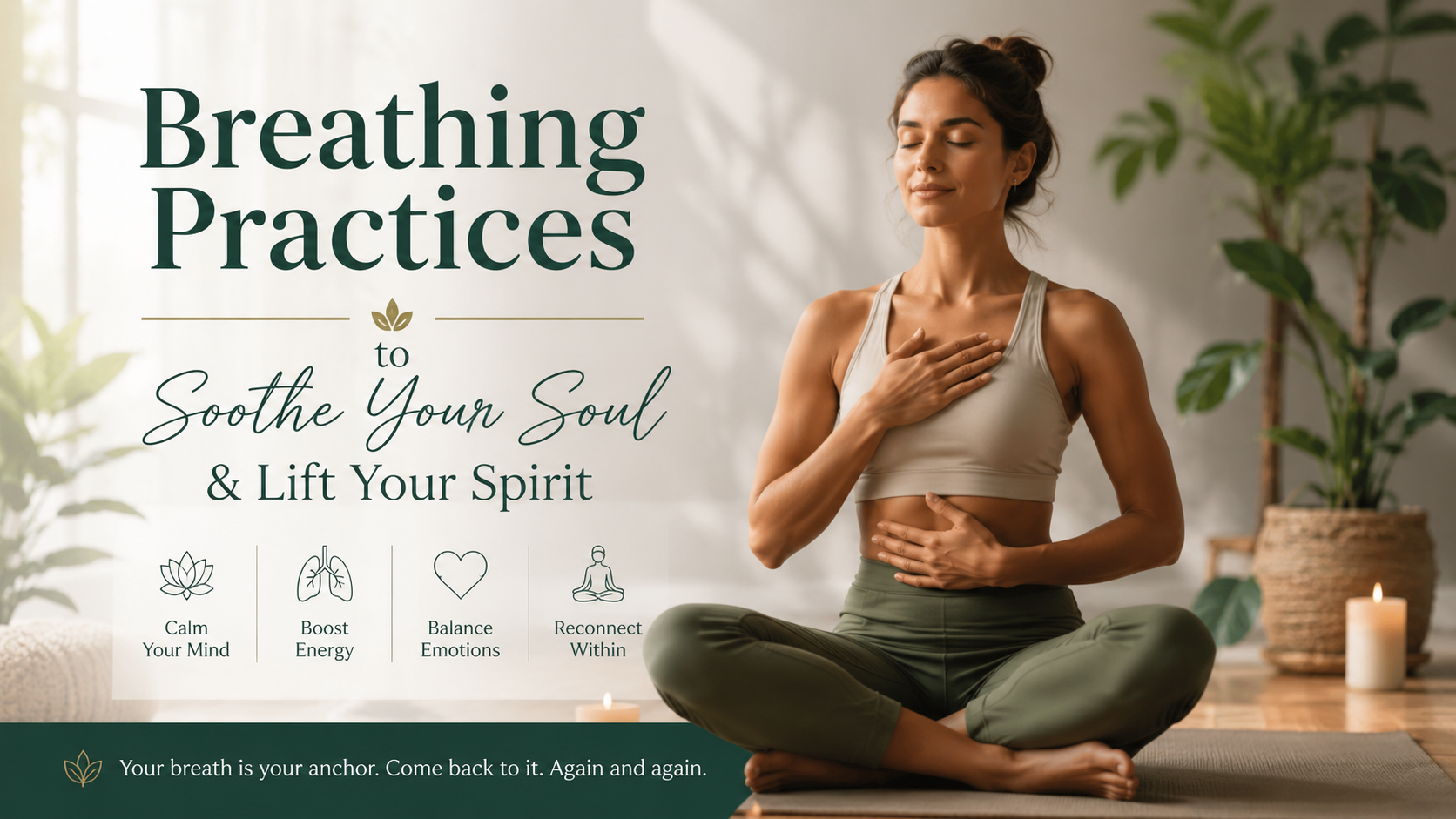
Did you know that there are many, many benefits to learning Pranayama (breathing practices) for your Body, Mind & Spirit Wellness? Traditional Yoga teaches us these practices and puts a lot of emphasis on all the different results we can experience. It’s truly wonderful that WE can choose what we need and then get the results almost instantly! This is, of course, depending on if you KNOW what you need. Let me break it down for you and shine some light on these benefits.
Now, if you attend big group classes, you may not get the explanation you deserve at the time, instead you just “go along with the crowd” with little understanding of the magic you can feel from it. I encourage you to always ask your teacher.
Breath is Life. In fact, “prana” means Life Force in Sanskrit. Just knowing that alone says it all. However, in this fast-paced world our Nervous System may have adapted to a dysfunctional, stressed breath that starts us breathing into our upper chest and shoulders first which may take our diaphragm out of the picture and our breathing is not functional.
Our BIGGEST breathing muscle is our Diaphragm. Do you know where it is?
Find your navel, move up to the apex of your ribs (where you would perform the Heimlich if someone was choking) and that is the front of it. It goes all the way around your body here under your ribs to your back! It’s a big stretchy dome.
It acts like a big plunder. When you inhale it drops down into your abdomen, exhale and it contracts back to it’s relaxed sate again. Ta Da! A breath!
When we experience stress, our breath gets shallow, short and up into the upper chest and shoulders on every inhale. This isn’t functional at all for our body and nervous system. This can send signals of stress. This is why it is “hard to get your breath” when you are stressed and the cycle continues. You may feel that this “stress breath” is normal after a while so in my classes, I have students cross their arms over their chest in a crisscross, each hand on the opposite shoulder. This will help you notice if you lift your shoulders in order to breath rather than using your diaphragm that should engage initially.
Yoga practice that includes breathing practices will helps us reset to our natural relaxed breath. Then we can choose a practice of energizing breaths, to lift our energy or deeply relaxing breaths to down regulate our system.
Relaxed breathing in yoga is a quiet superpower. At its core, it calms the nervous system, shifting you out of stress mode and into a state where your body can soften, heal, and pay attention again. This will support your movement (Asana) practice because your muscles will be at their best and so will your state of mind.
Here I can give you a brief overlook at the proven benefits of Pranayama.
Reduces stress and anxiety — Slow, steady breaths activate the parasympathetic nervous system, lowering heart rate and easing tension.
Improves focus and presence — Breath awareness anchors the mind, reducing mental clutter and helping you stay grounded.
Enhances mobility and release — Relaxed breathing signals the body that it’s safe to let go, making muscles more receptive to stretching.
Balances energy — It smooths out the highs of Yang and the lows of Yin, helping you find that sweet middle ground.
Supports emotional regulation — Deep breathing creates space between stimulus and reaction, allowing more clarity and compassion.
Improves overall well‑being — Better oxygen flow, steadier mood, and a sense of inner spaciousness ripple into daily life.
Who wouldn’t want these benefits? If you begin with the simple relaxed practices, then you can build upon them and move into the more energizing ones. The foundation is the most important. When you attend a smaller class, you are more likely to get the guidance that you need. With my students, whether it is a private 1:1 or a small group class, I always encourage asking questions and sharing your experience. We can all use a better breath.